In response to COVID-19, demand for latex gloves, disposable masks, gowns, and other personal protective equipment (PPE) has multiplied. When masks turn out to be a daily necessity for health protection, discarded masks have become one of the most common items in plastic waste, triggering serious concerns on ocean plastic pollution.
In 2020, OceansAsia, a marine conservation organization based in Hong Kong, published an official report emphasizing primarily on the worsening marine plastic pollution issues under the impact of pandemic. According to the report, researchers have estimated that by the end of 2020, a total of 1.56 billion face masks will have entered oceans around the globe, which could equate to 6,240 tons of plastic pollution at maximum.
OceansAsia noted this phenomenon in February 2020 — around one month after the Centers for Disease Control and Prevention (CDC) reported the first confirmed case of COVID-19 on Jan. 20, 2020. Since the pandemic hit, the PPE wastes collected along the coasts in the United States reached an unprecedented level — largely resulting from indiscriminate disposal.
The United States: A Major Contributor to the Ocean Plastic Crisis
From a universal viewpoint, the by-product of the pandemic — for instance, slackened fisheries economies and reduced consumption of seafood — have brought a measure of positive impact on marine biodiversity recovery. Yet, a fundamental reform of the general trend of marine environmental degradation has not been achieved overall.
According to the National Academies of Sciences, Engineering and Medicine (NASEM), the United States is taking the top spot as dominant contributor to global marine plastic crisis in 2016 -- a country that owns only 4.25% of the world’s population is generating the most plastic waste of any country around the globe.
"People were missing the connection with the outdoors and nature. So it felt like cleanups were therapeutic for them."
Seeking New Opportunities from the Pandemic
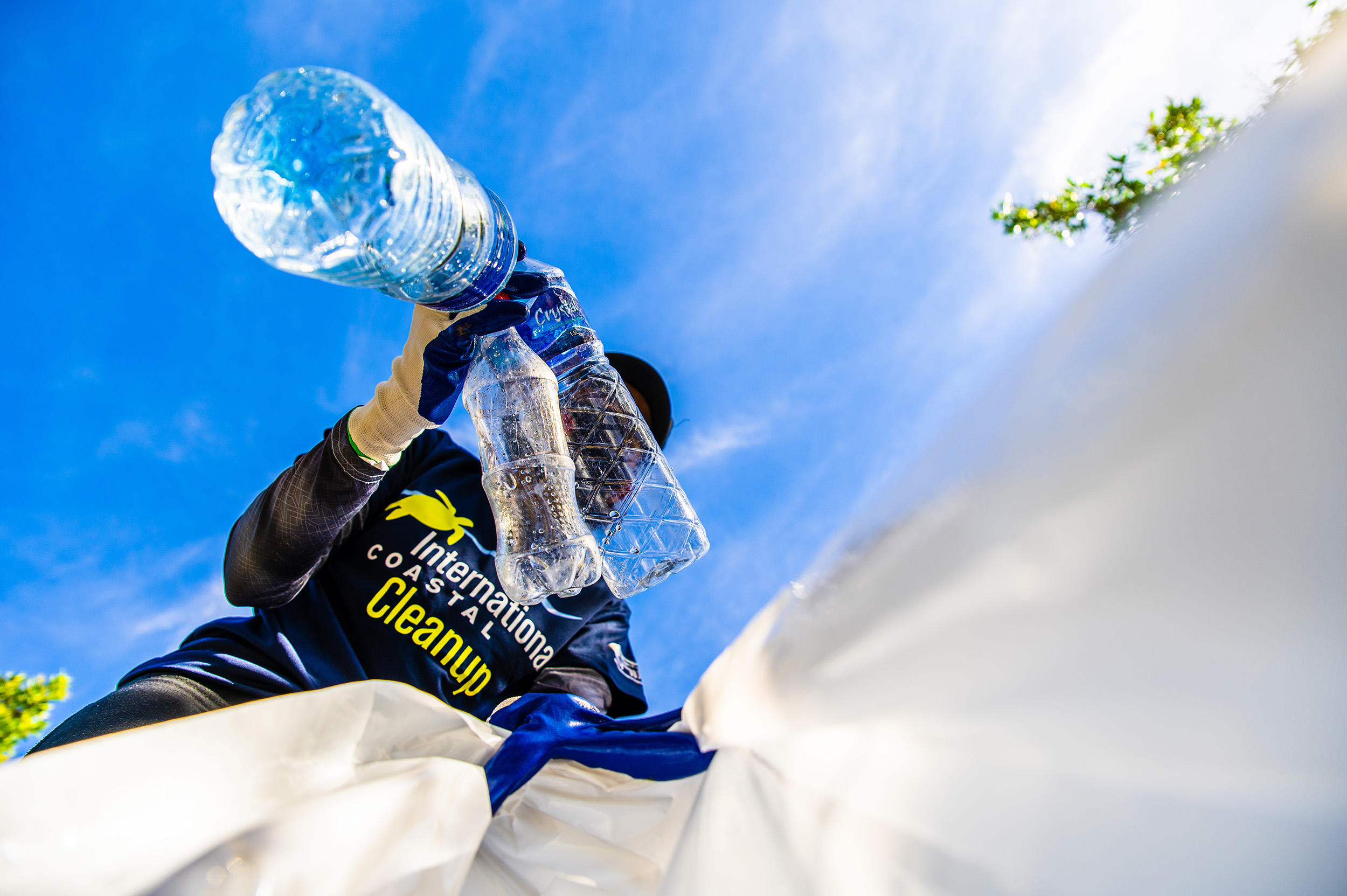
Today, the International Coastal Cleanup (ICC) is working at its 38th year of engaging volunteers from over 100 countries to remove debris from beaches and waterways around the world. As the world’s largest and most well-established organization that is solely dedicated to the wellbeing of the marine environment, ICC and its volunteers are contributing to the world’s largest database on marine debris.
When the entire world went on pause, gathering groups of volunteers for coastal cleanup seemed unfeasible. The ICC soon shifted to an alternative focus by encouraging people to go out, participate as an individual or with their small family unit, and report their cleanups to Clean Swell, a mobile app designed by the ICC for track down individual efforts.
“People were itching to get outside, and they were missing that connection with the outdoors and nature,” said Sarah Kollar, the project and outreach manager at the ICC. “Cleanups were almost therapeutic for people.”
Kollar found that the ICC leaned on the Clean Swell in a big way as COVID started to hit, appreciating its low barrier of entry and applicability for those who wanted to help out the ocean through cleanup.
“You didn't even have to be on a coast,” Kollar said. “Just collecting what you could find can make people feel like they’re doing something good for the environment and reconnecting with nature that way.”
Given the pandemic and the influx of disposable masks and gloves, a new category — “Masks & Gloves (PPE)” — was added to ICC’s dataset in the beginning of August 2020. “Our partners immediately started flagging that they were finding disposable masks and latex gloves on the sidewalks, neighborhoods, streets, and their local waterways,” Kollar said. “We tried to pivot as quickly as we could.”
#1
Starting in August 2020, as state governments imposed mask mandates on the basis of all public activity, the widespread consumption of single-use masks and gloves has led to a skyrocketing surge of improperly disposed pandemic wastes.
From 2017 to 2019, California volunteer groups found 24 pieces of PPE altogether. However, the total PPE wastes surged to more than 14,000 in 2020.
#2
In California, the monthly collected PPE wastes had reached its highest in September, 2020, for about 9,100 items in total. This was one month after ICC added the "Masks & Gloves" category to its dataset.
In the following year, volunteers in the states collected for an average of 2,088 PPE-related wastes per month.
#3
Similarly in Texas, a sudden spike of masks and gloves joined the day-to-day detritus in the state’s ocean ecosystems in 2020, and continued to grow over the following years.
#4
Although there is a considerable discrepancy between California and Texas in terms of pandemic wastes, the general trend is applicable to the whole nation: the COVID-19 is forcing us to rethink the earth's plastic problem.